Texas homeowners face a unique challenge when it comes to swimming pool durability. Intense sun exposure, extreme summer heat, fluctuating temperatures, and hard water conditions can significantly shorten the lifespan of a pool surface. Choosing the right pool finish isn’t just about appearance. It’s about longevity, maintenance, and protecting your investment in one of the harshest climates in the country.
If you’re building a new pool or planning a pool resurfacing project, understanding which pool surface lasts longest in the Texas sun can save you thousands of dollars over time. We’ll break down the most common pool surface types, how they perform in Texas conditions, and which option offers the best long-term durability.
Why the Texas Climate Is Tough on Pool Surfaces
Texas weather creates a perfect storm for pool wear and tear. Long periods of direct UV exposure cause fading, surface breakdown, and discoloration. Summer water temperatures can soar, accelerating chemical reactions that degrade finishes. In many regions, hard water adds mineral scaling, while sudden weather changes stress pool materials.
Because of these factors, pool surfaces in Texas tend to wear out faster than in milder climates. Selecting a surface specifically suited for heat and UV resistance is essential for extending the life of your pool.
Plaster Pool Surfaces: Affordable but Short-Lived
Traditional white plaster is one of the most common pool finishes, largely due to its low upfront cost. However, it’s also the least durable option for Texas pools.
How Plaster Performs in the Texas Sun
Plaster is porous and highly susceptible to UV damage, chemical imbalance, and staining. In Texas heat, plaster surfaces often experience:
- Rapid discoloration and fading
- Etching from high temperatures and water chemistry
- Increased roughness over time
Average Lifespan in Texas
In ideal conditions, plaster can last 7–10 years. In Texas, many homeowners see noticeable deterioration in as little as 5–7 years.
Bottom line: Plaster is budget-friendly upfront but typically does not last long in the Texas sun.
Quartz Pool Finishes: Improved Durability and Appearance
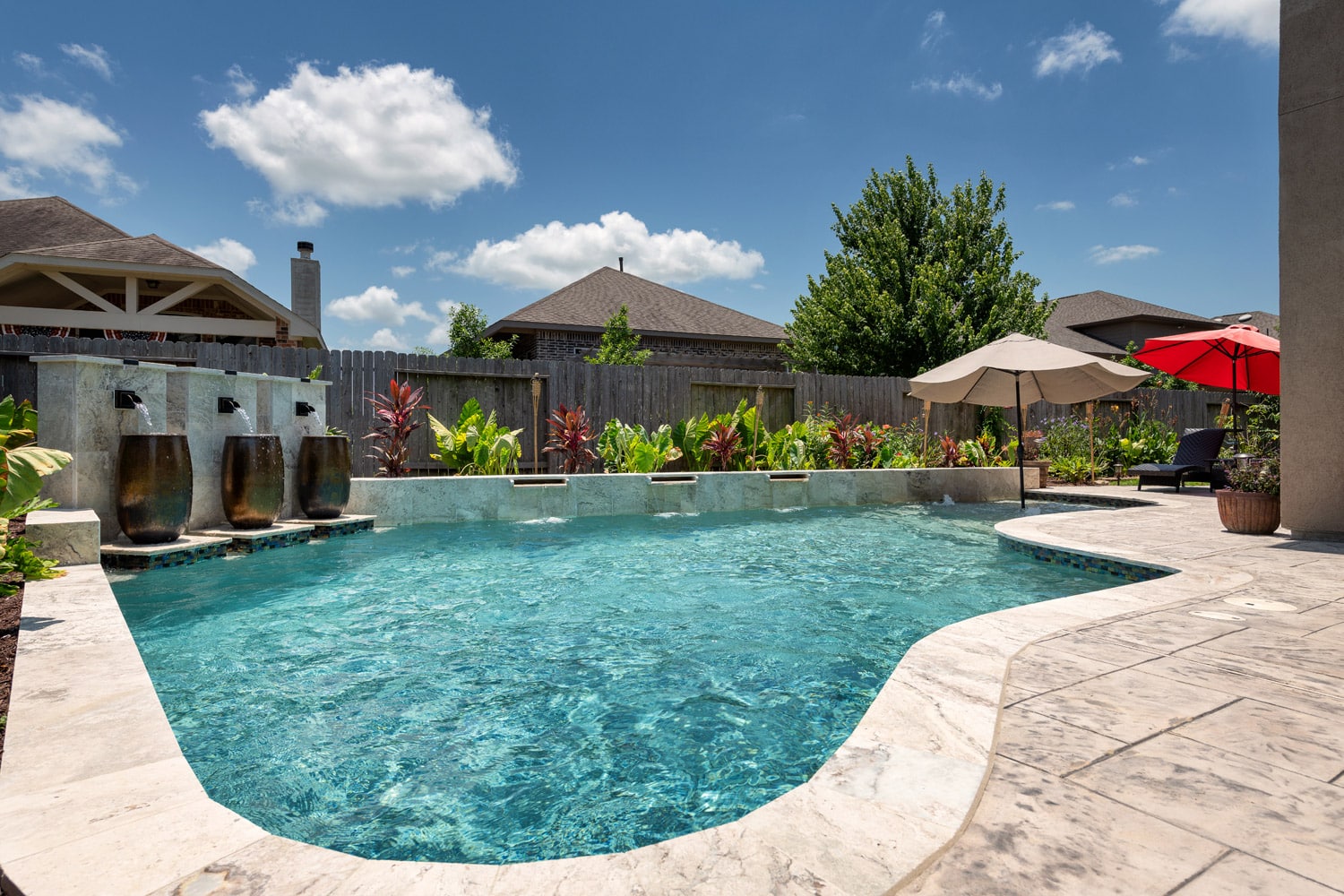
Quartz pool surfaces combine plaster with crushed quartz aggregate, creating a harder and more stain-resistant finish.
Benefits in Hot Climates
Quartz is less porous than plaster, which helps it withstand UV exposure and chemical stress. It also reflects light well, helping maintain color longer under intense sun.
Average Lifespan in Texas
Quartz finishes typically last 10–15 years in Texas when properly maintained.
Pros and Cons
- Pros: More durable than plaster, smoother feel, better color retention
- Cons: Still susceptible to long-term UV fading, higher cost than plaster
Quartz is a solid mid-range option for Texas homeowners seeking improved longevity without the premium price of pebble finishes.
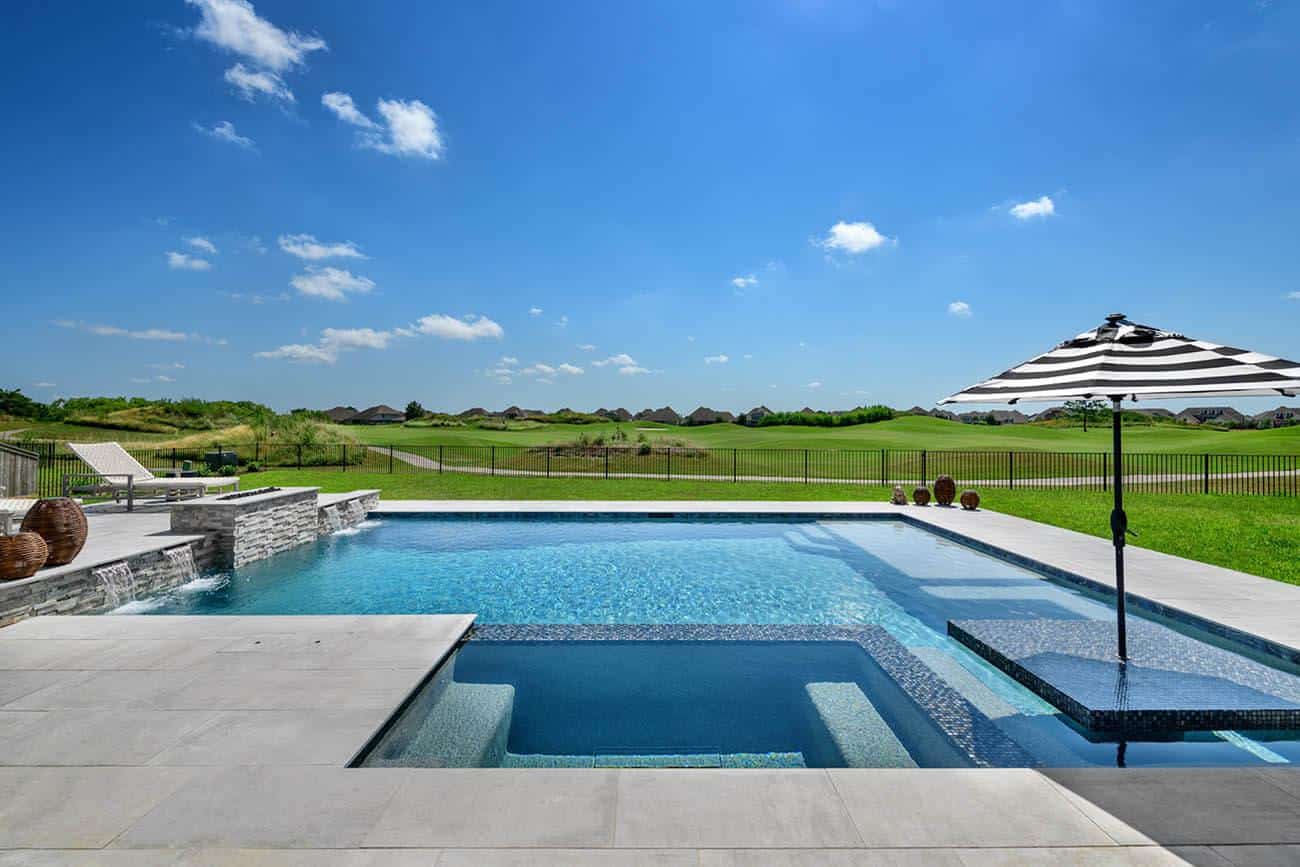
Pebble Pool Finishes: The Longest-Lasting Choice in Texas
Pebble pool finishes, made from natural river pebbles mixed with cement, are widely regarded as the most durable pool surface available, especially in extreme climates.
Why Pebble Finishes Excel in Texas
Pebble surfaces are highly resistant to:
- UV radiation
- Chemical imbalance
- Heat-related cracking and etching
The exposed stones protect the cement beneath, dramatically slowing surface degradation even under relentless sun exposure.
Average Lifespan in Texas
Pebble finishes can last 20–25 years or more, even in harsh Texas conditions.
Additional Advantages
- Excellent color stability
- Superior resistance to stains and algae
- Natural, high-end appearance
While pebble finishes have a higher upfront cost, their extended lifespan often makes them the most cost-effective choice over time.
Comparing Pool Surface Longevity in Texas
When ranking pool surfaces by durability in the Texas sun, the general order is:
- Pebble finishes – Longest lifespan and best heat resistance
- Quartz finishes – Good balance of durability and cost
- Traditional plaster – Shortest lifespan in extreme heat
This ranking assumes proper water chemistry and regular maintenance, which are critical regardless of surface type.
Maintenance Still Matters, Even with the Best Surface
Even the most durable pool surface won’t last if water chemistry is neglected. Texas heat accelerates chemical reactions, making regular testing and balancing essential. Proper brushing, filtration, and professional inspections help extend surface life and preserve appearance. A high-quality surface paired with consistent maintenance offers the best protection against premature resurfacing costs.
Choosing the Best Pool Surface for Your Texas Backyard
If longevity is your top priority, pebble pool finishes are the clear winner for Texas homeowners. They withstand intense sun, high temperatures, and chemical stress better than any other option. Quartz offers a strong middle ground, while plaster is best reserved for short-term budgets or low-exposure environments.
Ultimately, the right pool surface depends on your budget, design goals, and how long you plan to stay in your home. Investing in a durable surface upfront can mean decades of enjoyment and fewer costly repairs down the line.
At Avree Custom Pools, we design and build fully custom swimming pools for luxury homes throughout Houston. Our pool builders focus on thoughtful design, quality craftsmanship, and a smooth, hands-on process from start to finish. Every pool we create is tailored to the home and the way our clients live, resulting in outdoor spaces that feel both elevated and welcoming.