Texas summers are no joke. With temperatures soaring well above 100°F, having a pool isn’t just a luxury; it’s practically a necessity. But not all pool designs handle extreme heat equally. The right design keeps your water cool, reduces maintenance costs, and creates a comfortable outdoor oasis. The wrong one turns your backyard into an overheated, high-maintenance headache.
If you’re planning to build or upgrade a pool in Texas, here’s what you need to know.
Why Pool Design Matters in Hot Climates
Every element of your pool, from depth to materials, affects how enjoyable it is when temperatures climb. Poor design choices lead to water that feels like bathwater, increased evaporation, higher energy bills, and deck surfaces too hot to walk on. A thoughtfully designed pool, on the other hand, stays refreshing all summer and keeps long-term costs in check.
What Works: Smart Pool Designs for Texas Heat
Deeper Pools Stay Cooler
Shallow pools heat up fast under direct sunlight. A deep end of 5–7 feet or more retains cooler temperatures longer, making it far more comfortable during peak summer heat.
Shade Features
Direct sunlight heats both the water and the surrounding surfaces. Pergolas, retractable shade sails, poolside cabanas, and strategically planted trees all help. Partial shade over sections of the pool lets swimmers cool off without ever having to get out.
Light-Colored Pool Finishes
Dark interiors absorb sunlight, raising water temperature. Light blue or white plaster, reflective aggregate finishes, and pale tile designs reflect sunlight instead, helping maintain a cooler pool throughout the day.
Water Features for Cooling
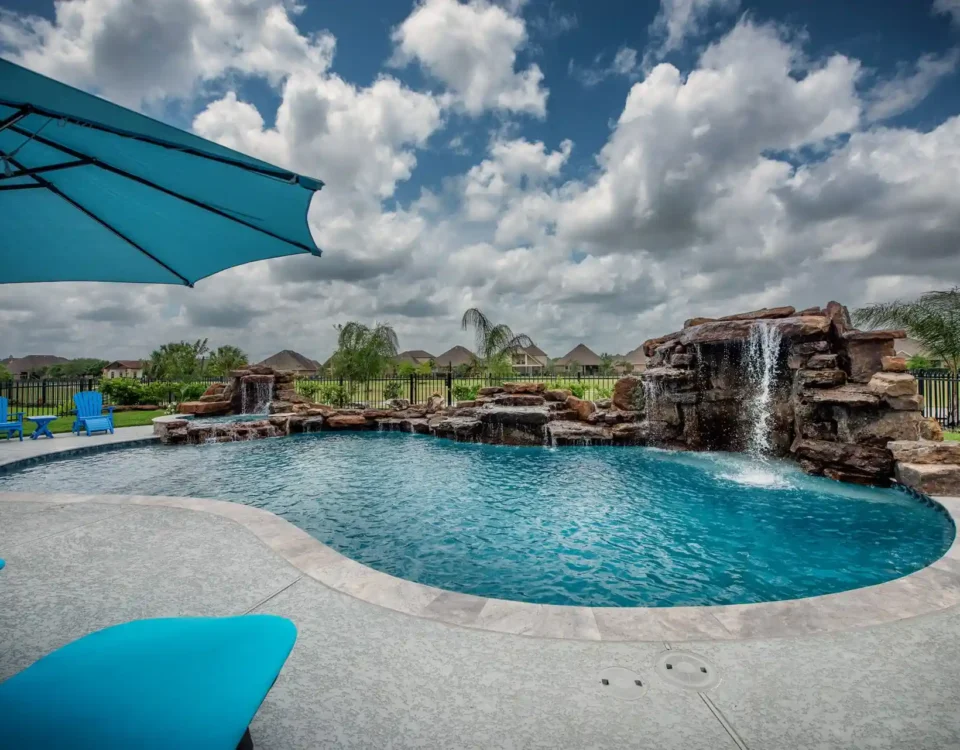
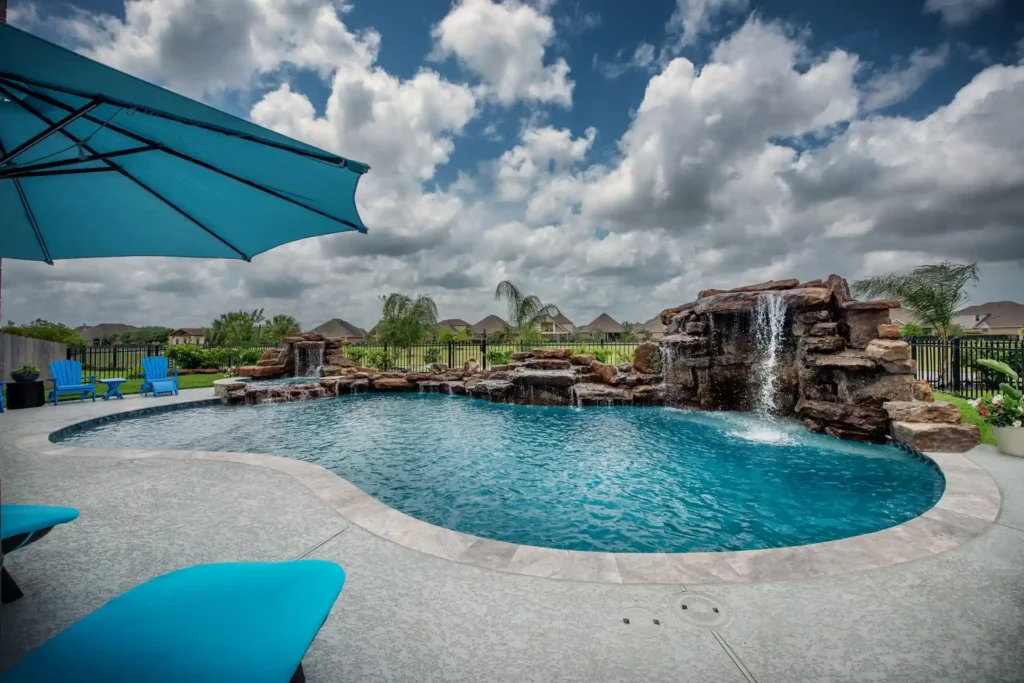
Moving water cools faster than still water. Waterfalls, deck jets, bubblers, and fountains promote circulation and evaporative cooling, keeping things refreshing even on the hottest days.
Efficient Circulation Systems
Good circulation prevents stagnant water from heating unevenly. Variable-speed pumps, properly placed return jets, and automated filtration systems keep water clean and consistently cool. Efficient circulation also reduces algae growth, which thrives in warm water.
Cool Deck Materials
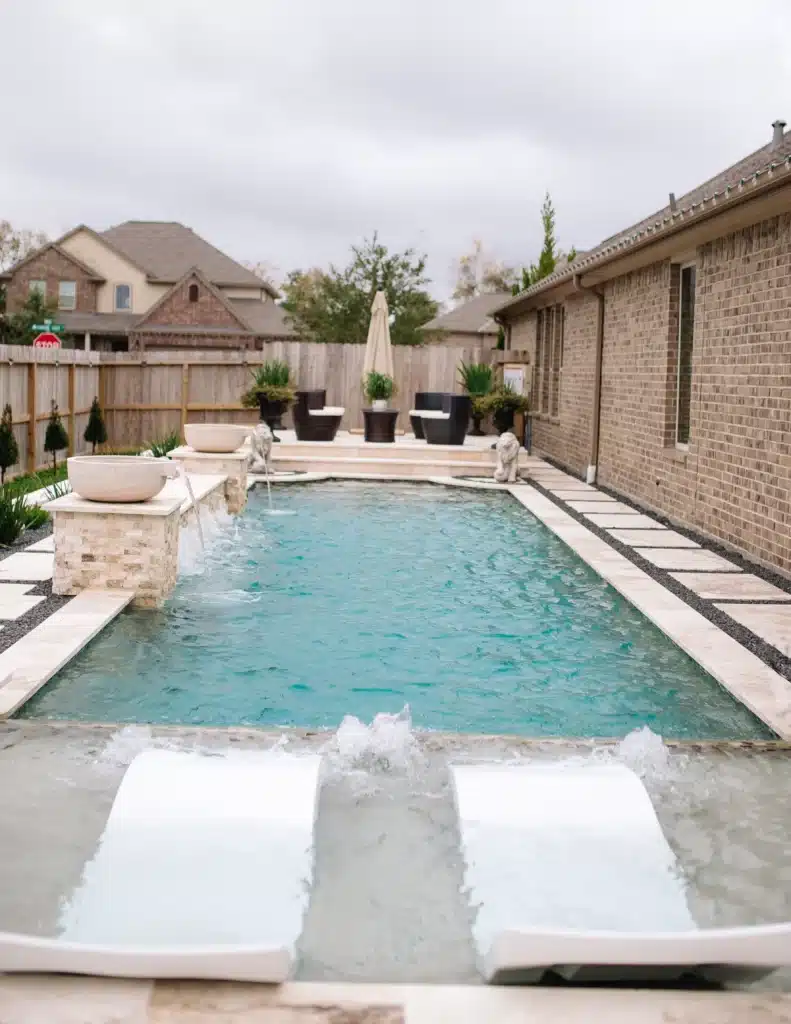
Pool decks can become unbearably hot under the Texas sun. Travertine pavers, concrete with Cool Deck coating, and natural stone with heat-resistant properties all stay cooler underfoot, making the entire pool area more usable.
Wind Exposure and Placement
Airflow helps cool both the water and the surrounding area. Position your pool to take advantage of natural breezes and avoid blocking wind with tall fences or dense landscaping. Even a slight breeze makes a noticeable difference.
What Doesn’t Work: Mistakes to Avoid
All-Shallow Designs
Shallow pools heat up quickly and offer little relief during extreme heat. Without a deeper zone, the water warms rapidly and becomes uncomfortable during peak afternoon hours.
Dark Pool Interiors
Dark finishes look sleek, but they absorb heat efficiently, raising water temperatures, increasing chemical usage, and delivering a far less refreshing swim. In Texas, comfort should always win over aesthetics.
No Shade Planning
Many homeowners focus entirely on the pool and ignore the surrounding environment. No shaded seating, full sun exposure all day, and overheated deck surfaces can make even a well-designed pool uncomfortable to be around.
Poor Landscaping Choices
Heat-retaining materials like dark gravel, trees that drop excessive debris, and dense hedges that block airflow all work against you. Good landscaping should enhance cooling, not trap heat.
Inefficient Equipment
Older or poorly designed pool systems struggle in extreme heat, driving up energy costs, delivering inconsistent circulation, and increasing maintenance demands. Modern, energy-efficient equipment is essential for Texas conditions.
Ignoring Evaporation
High temperatures accelerate water loss, affecting both costs and water chemistry. Leaving pools uncovered during peak heat and neglecting windbreaks can significantly impact your pool’s efficiency over time.
Why Choose Avree Custom Pools?
Designing a pool for the Texas heat means making practical, climate-conscious decisions, not just aesthetic ones. Deeper water, light-colored finishes, shade structures, and efficient circulation systems can transform your backyard into a genuine retreat, even in triple-digit temperatures. Overlook these factors, and you’re looking at overheated water, higher costs, and a space you’d rather avoid.
At Avree Custom Pools, we work alongside Houston homeowners to design and build pools that become the finest part of your home’s story. Our skilled pool builders combine meticulous craftsmanship with a refined process to create outdoor spaces that feel purposeful, polished, and entirely your own.